
The stages of healing
When your dog goes through injury or surgery, they follow a similar routine to humans in the same position. The primary goal is to minimise secondary tissue damage and pain, following this we can work on mobility and strength. In this post, we are going to look into each stage of healing and what it means for your pet as well as what we can do at each stage to help them recover.
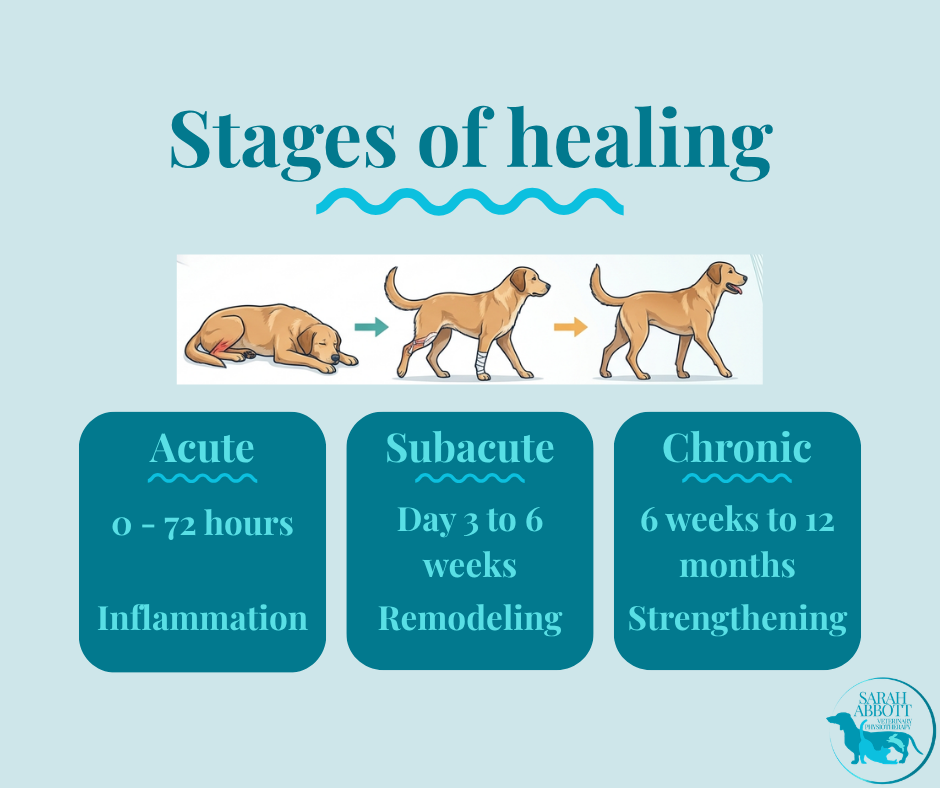
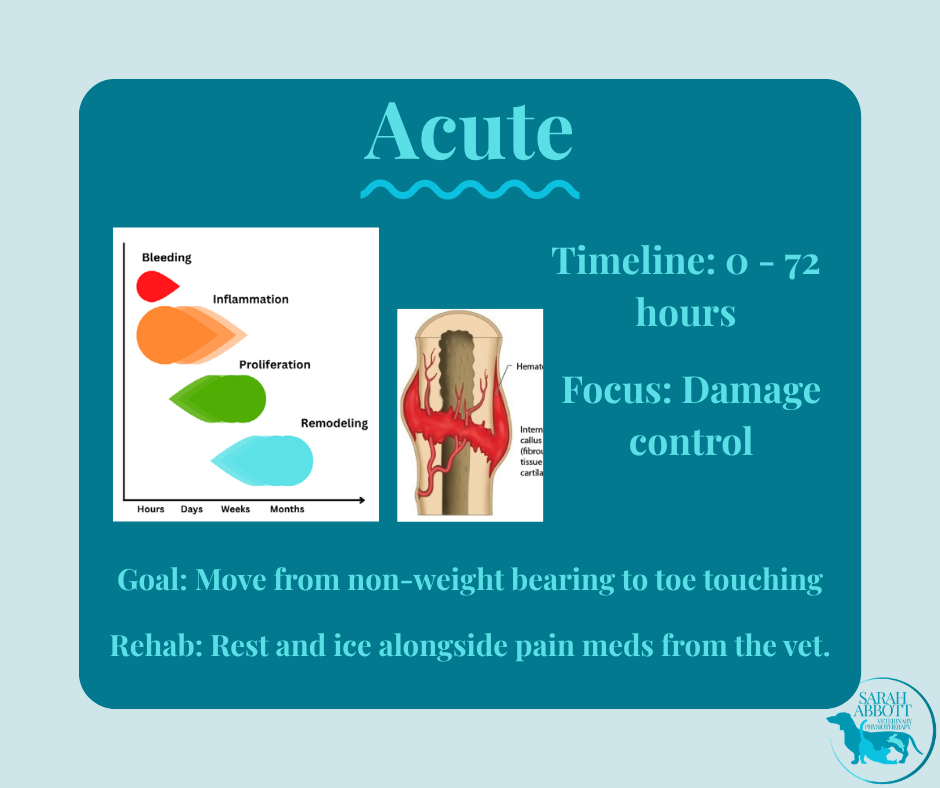
The acute stage of healing is directly following the injury in the first 3 days, meaning the body needs to focus on damage control.
What’s happening: the inflammation is at its peak and nerve endings are sensitised.
Our goals at this stage are moving from non-weight bearing to toe touching.
Rehab modalities: rest and ice alongside pain management from the vet.
The danger at this stage is doing too much activity can cause a minor issue to be exasperated into a more complex issue.
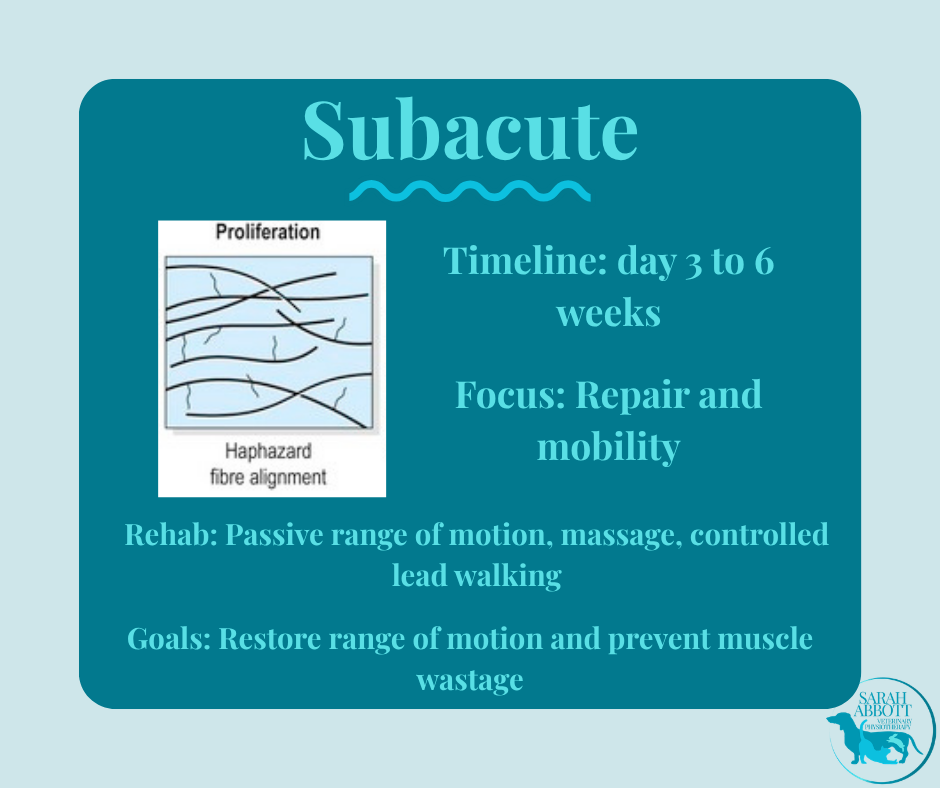
The next stage is the subacute healing stage, where the tissue is in the construction phase. This happens following the acute stage and up to 6 weeks following, focusing on repair and mobility.
What’s happening: cells are busy rebuilding tissue fibres, however total immobilisation can cause these to grow in disorganised and weak patterns so small bursts of gentel exercises can be added here.
Our goal here is restoring range of motion and preventing muscle wastage.
Rehab modalities: passive range of motion, massage, laser therapy, controlled lead walking.
The danger is too much uncontrolled energy can tear these new fibres before they have a chance to strengthen, which causes set backs in healing.
Chronic
The final stage of healing is the chronic stage, this can take up to 12 months and focuses on power and strength.
What’s happening: the previous collagen is replaced with a stronger, more elastic collagen that learns to handle the musculoskeletal stresses of a dog’s life.
Our goals are building muscle back up to previous strength.
Rehab modalities: therapeutic exercise and hydrotherapy.
The danger is developing chronic compensations in other muscles and joints due to improper use, leading to secondary issues.
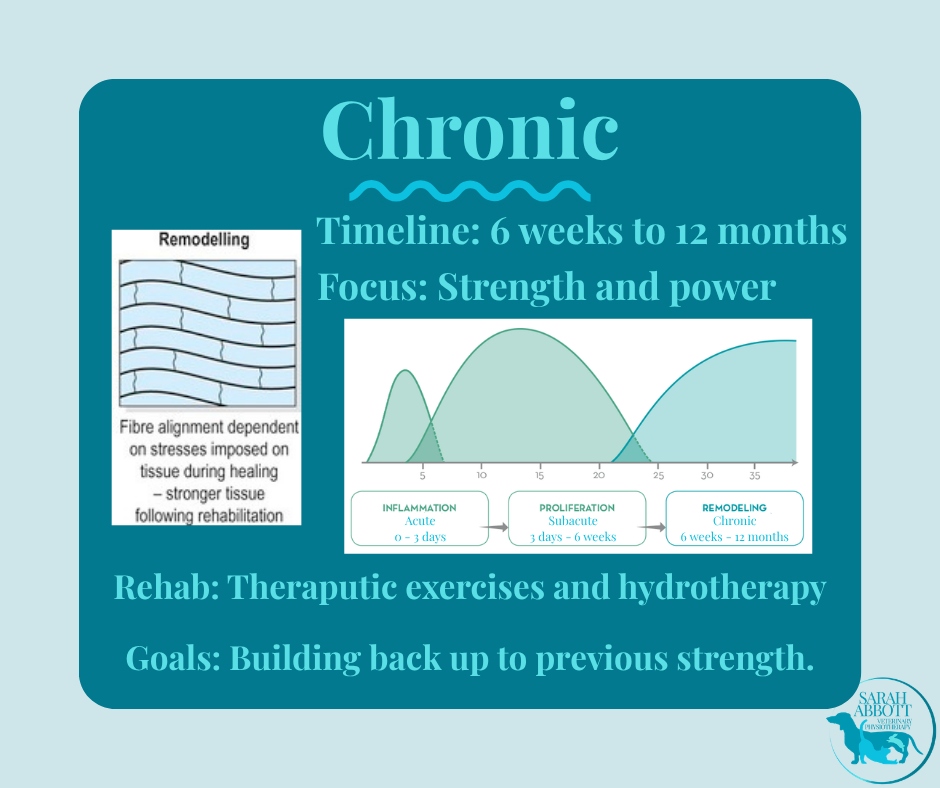
The final stage of healing is the chronic stage, this can take up to 12 months and focuses on power and strength.
What’s happening: the previous collagen is replaced with a stronger, more elastic collagen that learns to handle the musculoskeletal stresses of a dog’s life.
Our goals are building muscle back up to previous strength.
Rehab modalities: therapeutic exercise and hydrotherapy.
The danger is developing chronic compensations in other muscles and joints due to improper use, leading to secondary issues.
To talk more about how we can help your pet at each stage of their recovery:
Call/text us on 07846099814
Email info@sarahabbott-vetphysio.co.uk
Message on Facebook/Instagram
